
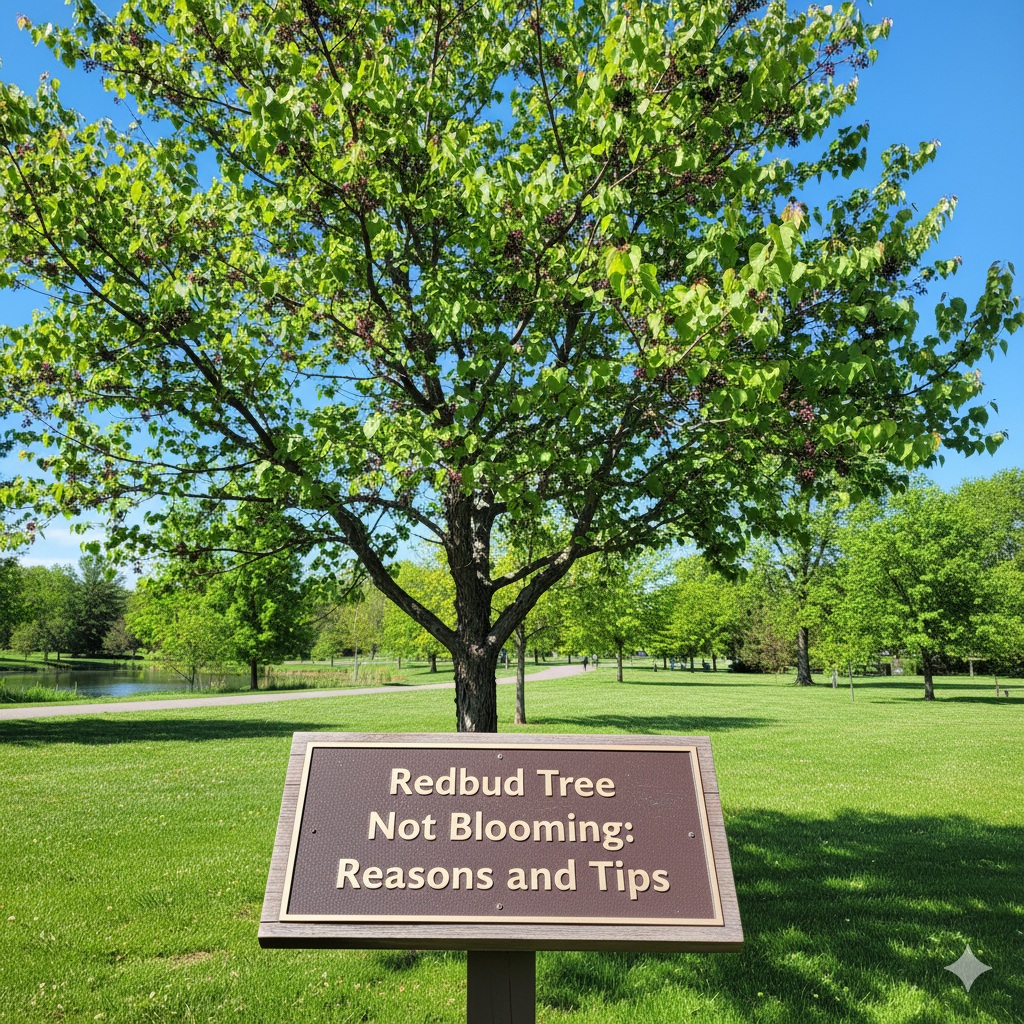
Redbud trees (Cercis spp.) are among the most beloved spring-flowering trees in North America. Their brilliant pink, rosy purple, lavender, or white blossoms signal the start of spring long before most other trees leaf out. But what happens when a redbud tree doesn’t bloom?
For many homeowners, this is frustrating — the tree may look alive, leaf out late, or appear healthy yet produce no flowers at all. This guide explains why redbud trees fail to bloom, how to fix it, how long they take to mature, and what pests or diseases to watch for. Whether your tree is newly planted, struggling after winter, or simply underperforming, this comprehensive guide will walk you through solutions for your Redbud Tree Not Blooming.
🌿 1. How to Get a Redbud Tree to Bloom
If your redbud isn’t blooming, start with these proven strategies:
✔ 1. Ensure Full to Partial Sun
Redbuds can survive in shade, but they will not bloom well in low light.
- Best: 6+ hours of direct sunlight
- Acceptable: Dappled/partial sun
- Poor: Deep shade under larger trees
Move young trees if necessary — redbuds transplant well while small.
✔ 2. Avoid Over-Fertilizing (Especially Nitrogen)
Too much nitrogen creates lush foliage but zero flowers.
- Avoid lawn fertilizers (high N).
- Use a balanced fertilizer: 10-10-10 once per year (optional).
- Or use no fertilizer if soil is healthy.
✔ 3. Water Properly — Deep and Infrequent
Redbuds bloom poorly when:
- Overwatered (root rot)
- Underwatered (stress)
Water deeply once per week during drought, allowing soil to dry between waterings.
✔ 4. Mulch the Right Way
Use 2–3 inches of mulch but never against the trunk.
Mulch volcanoes rot the bark and slow growth.
✔ 5. Prune at the Correct Time
Incorrect pruning removes the next year’s buds.
- Only prune after flowering (late spring).
- Never prune in fall or winter — buds form earlier.
Remove dead/diseased branches anytime.
✔ 6. Protect from Winter Damage
Cold snaps kill flower buds.
If you live in zones 4–6, cold injury is very common.
✔ 7. Choose the Right Variety
Some redbuds bloom earlier, harder, or more reliably than others (varieties listed later).
🌸 2. How Long Does It Take for a Redbud Tree to Bloom?
Most redbuds begin blooming when they are:
🌱 3 to 5 years old
Younger trees often leaf out but don’t flower yet because they are immature.
Time to blooming by variety:
- Eastern Redbud (Cercis canadensis): 3–5 years
- Forest Pansy: 4–6 years
- Rising Sun Redbud: 3–4 years
- Texas Redbud (Cercis canadensis var. texensis): 3–7 years
If your tree is younger than 3 years, lack of bloom is 100% normal.
🌿 3. Why Is My Tree Alive but Not Budding?
If your redbud is leafing out but failing to produce buds, possible causes include:
❌ Age (Too Young)
The #1 reason — it simply isn’t mature enough.
❌ Too Much Shade
Redbuds bloom poorly or not at all without sun.
❌ Wrong Pruning Time
If pruned in fall/winter, you removed spring buds.
❌ Winter Damage
Flower buds are more cold-sensitive than leaf buds.
A redbud may leaf out after winter but not bloom because only the flower buds were killed.
❌ Drought Stress (Previous Season)
A drought the prior summer reduces the next year’s buds.
❌ Root Damage
Construction, transplant shock, or poor planting depth can delay budding for 1–3 years.
❌ Over-Fertilization
High nitrogen = leaves > flowers.
❌ Disease or Pests
Cankers and borers often suppress buds.
🌸 4. Why Is My Redbud Tree Not Blooming in Winter?
Redbuds do not bloom in winter.
They bloom in early spring, usually March–April depending on climate.
If you’re expecting winter blooms, that’s not how redbuds behave:
- They form buds in winter
- Buds stay dormant
- Flowers open in spring
A redbud not blooming in winter is normal and expected.
🌷 5. Why Is My Redbud Tree Not Blooming After Winter?
If spring arrives and there are no blooms, likely causes include:
❄ Winter Flower-Bud Kill
Common in:
- Zone 4
- Zone 5
- Exposed windy yards
Cold winters often kill flower buds but spare leaf buds.
🌧 Late Frost in Early Spring
A freeze in March can kill buds overnight.
🌱 Soil Issues
Poor drainage or compacted soil leads to stress and fewer buds.
🐛 Pests or Diseases (see dedicated section)
🌤 Insufficient Sunlight
South- or west-facing exposure blooms best.
⛏ Root Injury
Digging, heavy machinery, or soil disturbance over roots causes bloom loss.
🌿 6. Redbud Tree: Pests and Diseases to Watch Out For
Redbuds are often called “low-maintenance,” but they do face problems that suppress blooming.
🐛 Common Pests
1. Redbud Borer (tree borer)
- Larvae burrow inside trunk
- Causes dieback and no blooms
Signs:
Sawdust-like frass, holes in trunk, wilted branches.
2. Caterpillars
Sometimes chew flower buds.
3. Scale Insects
Suck sap, causing stress.
4. Leafhoppers
Transmit diseases and harm new growth.
🍄 Diseases
1. Botryosphaeria Canker
Most common and deadly.
Symptoms:
- Sunken dark cankers
- Branch dieback
- No flowers
Fix: Remove infected limbs ASAP.
2. Verticillium Wilt
Soil fungus causing sudden wilt and branch death.
3. Root Rot
From overly wet soils.
4. Powdery Mildew
Usually cosmetic but weakens tree over time.
🛠 How to Manage Pests & Diseases
- Prune infected limbs 6–8 inches below symptoms.
- Improve airflow around the tree.
- Avoid overhead watering.
- Treat scale with horticultural oil.
- Keep mulch away from trunk.
- Use systemic insecticides only if needed.
💐 7. Redbud Tree Not Flowering — What’s Wrong? (Quick Checklist)
Use this checklist to diagnose quickly:
| Problem | Likely Cause |
|---|---|
| No blooms but leaves appear | Winter bud kill, shade, age |
| Blooms only on bottom branches | Top growth winter kill |
| Small or weak blooms | Drought, poor soil, nitrogen |
| No leaves or blooms | Tree may be dead |
| Tree blooms one year, not next | Over-pruning, frost, drought |
🌳 8. How Many Years Does It Take for a Redbud Tree to Bloom?
Average: 3 to 5 years
Full bloom maturity: 5 to 8 years
Timeline:
| Age | Bloom Expectation |
|---|---|
| 1 year | No bloom |
| 2 years | Maybe 1–2 flowers |
| 3 years | Light bloom |
| 4–5 years | Normal blooming |
| 7+ years | Peak flowering |
🌑 9. Is My Redbud Tree Dead? How to Tell
To test if your redbud is alive:
✔ Scratch Test
Scratch bark with your fingernail.
- Green under bark = alive
- Brown/tan = dead
✔ Bend Test
Live twigs bend and flex.
Dead twigs snap.
✔ Leafing Delay
Redbuds leaf out later than other trees.
Don’t assume it’s dead until May in northern climates.
✔ Multiple Dead Branches
May indicate borer damage or canker.
If trunk is green at base but dead above, tree may recover with pruning.
🌸 10. Redbud Tree After Bloom — What Happens Next?
After flowers fade:
- Redbud leaves emerge.
- Seed pods form in late spring.
- Summer canopy fills out.
- Pods dry and remain into fall/winter.
- Tree enters dormancy.
This cycle is normal for all redbud varieties.
🌿 11. Pros and Cons of Redbud Trees
🌟 Pros
- Stunning spring flowers
- Attract pollinators, bees, butterflies
- Tolerant of various soils (except waterlogged)
- Small size fits any yard
- Heart-shaped leaves add summer beauty
- Native to North America = wildlife friendly
⚠️ Cons
- Shorter lifespan (20–30 years)
- Prone to canker and borers
- Flower buds sensitive to frost
- Lower bloom performance in shade
- Seed pods can be messy for some people
🌸 12. When Do Redbud Trees Bloom?
Bloom time varies by climate:
| Region | Bloom Time |
|---|---|
| Deep South | February–March |
| Mid-South / Midwest | March–April |
| Northeast | April |
| Upper Midwest / Mountains | April–May |
Bloom lasts 2–3 weeks.
🌱 13. How Fast Does a Redbud Tree Grow?
Redbuds have a moderate growth rate:
- 12–18 inches per year
- Full size in ~10 years
- Mature height: 20–30 ft
- Spread: 15–25 ft
Fastest-growing variety: Rising Sun Redbud
🌸 14. Best Redbud Varieties for Reliable Blooming
🌷 Eastern Redbud (Cercis canadensis)
Most common, hardy, dependable bloomer.
🌷 Forest Pansy Redbud
Purple leaves, beautiful but sensitive to cold.
🌷 Oklahoma Redbud
Heavy blooming, deep magenta flowers.
🌷 Texas Redbud
Drought-tolerant; blooms strong in hot climates.
🌷 Rising Sun Redbud
Golden leaves, vibrant blooms.
🌷 Alba Redbud
White-flowering variety.
🌺 Final Thoughts: Getting Your Redbud to Bloom Every Year
To encourage strong annual blooming:
🌱 Give 6+ hours of sun
🌱 Water deeply but not excessively
🌱 Avoid high-nitrogen fertilizers
🌱 Prune only after flowering
🌱 Protect from severe winter exposure
🌱 Watch for pests and canker
🌱 Be patient with young trees (3–5 years)
With proper care, redbuds reward you with an explosion of color every spring.